How Much Exercise Do Kids Need a Day? (60 Minutes Daily)
The Physical Activity Guidelines for Koreans (2023) from Korea's Ministry of Health and Welfare and the Korea Health Promotion Institute recommend that children and adolescents aged 6–18 get at least 60 minutes of moderate-or-higher aerobic physical activity every day, plus vigorous activity, muscle-strengthening and bone-strengthening activity on at least 3 days a week each. This matches the World Health Organization (WHO) recommendations.
What's the guideline for kids' daily physical activity?
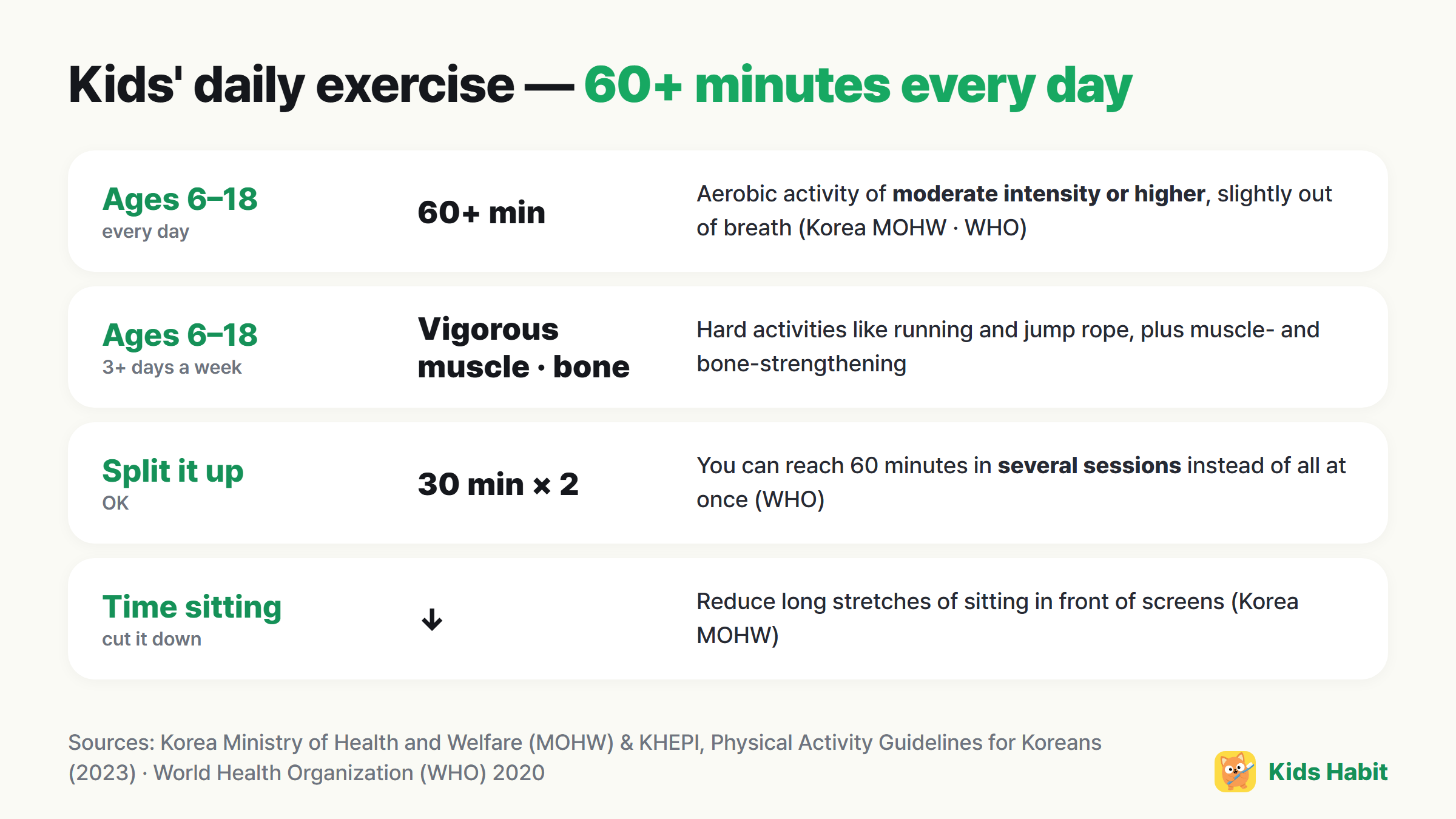
| Item | Recommendation | Basis |
|---|---|---|
| Aerobic activity | At least 60 minutes every day, moderate or higher | Korea Ministry of Health and Welfare (2023) · WHO |
| Vigorous activity | At least 3 days a week | Korea Ministry of Health and Welfare (2023) · WHO |
| Muscle- and bone-strengthening activity | Each at least 3 days a week | Korea Ministry of Health and Welfare (2023) · WHO |
| Time spent sitting | Reduce it | Korea Ministry of Health and Welfare (2023) |
Do the 60 minutes have to be done all at once?
No. The evidence summary for the World Health Organization (WHO) 2020 guidelines explains that the 60 minutes a day can be built up across several sessions. For example, you can add it up over the day with walking to and from school, playing at recess and jumping rope in the evening. It also notes that doing more than 60 minutes brings additional health benefits.
Korea's National Health Information Portal (Korea Disease Control and Prevention Agency) notes that as screen time grows, it competes with physical activity, so families should make a conscious effort to protect active time from an early age.
How do you make exercise a daily habit?
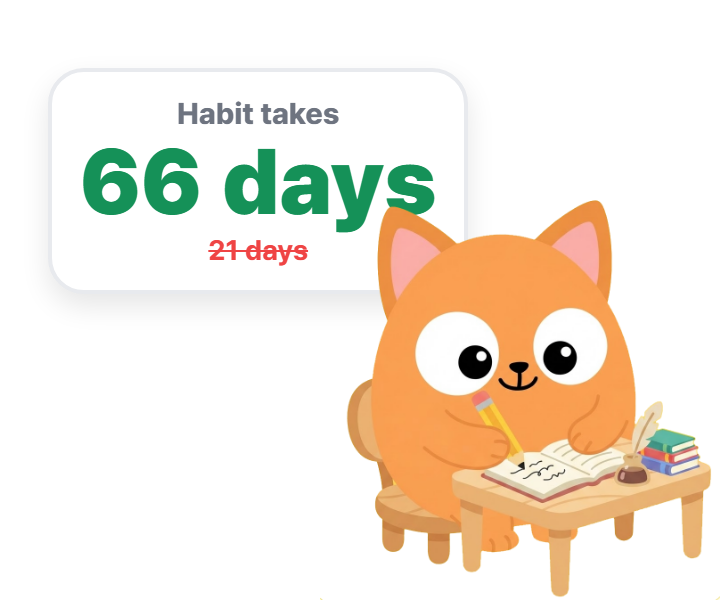
- At a set time: Doing it at the same time every day makes it easier to become a habit. In habit-formation research, exercise habits took about 1.5 times longer to stick than eating and drinking habits (Lally et al. 2010).
- In small pieces: Rather than aiming for 60 minutes from the start, begin with 10–20 minutes at a time.
- Praise right away: When they finish, praise specifically right away (CDC).

Frequently asked questions
How active should preschoolers be?
Korea's National Health Information Portal (Korea Disease Control and Prevention Agency) advises that children aged 3–5 get a variety of active play every day and spend less time sitting for long periods. It recommends aerobic play such as running, swimming and dancing together with activities that build muscles and bones.
Do after-school sports classes count toward the 60 minutes?
If the activity is moderate or higher (enough to make them slightly out of breath), it can count. You can also build it up across several sessions during the day (WHO).
What if my child dislikes exercise?
Start short with play they enjoy, and praise specifically as soon as they finish. Exercise habits can take longer to stick than other habits (Lally et al. 2010).
References
- Korea Disease Control and Prevention Agency National Health Information Portal — Physical activity (Ministry of Health and Welfare & Korea Health Promotion Institute, Physical Activity Guidelines for Koreans, 2023; Korean)
- World Health Organization (WHO) 2020 guidelines on physical activity and sedentary behaviour (British Journal of Sports Medicine summary)
- 2020 WHO guidelines — evidence summary for ages 5–17 (IJBNPA)
- US Centers for Disease Control and Prevention (CDC) — Physical Activity Guidelines for Children
- British Psychological Society (BPS) Research Digest — How to form a habit
This article provides general parenting information based on materials from official organizations and does not replace diagnosis or treatment. If you're concerned about your child's health or development, consult a specialist such as a pediatrician or pediatric dentist.